

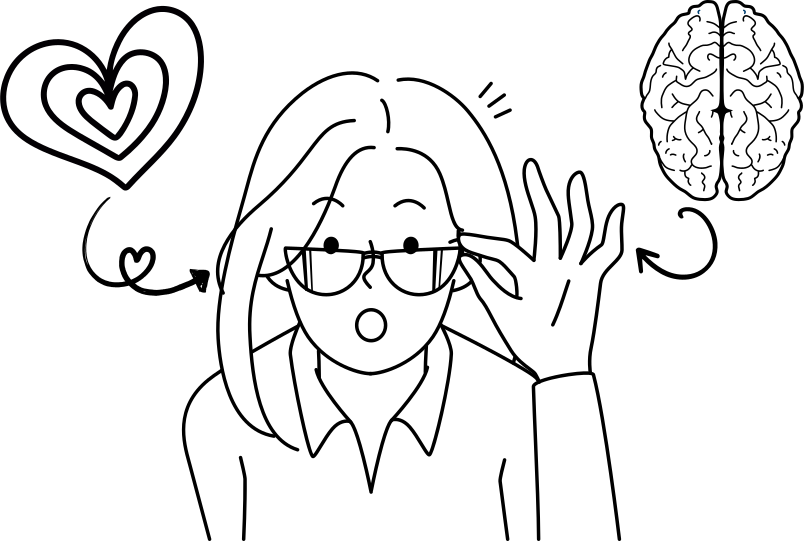
What Is the Affect Heuristic? The Psychology of Emotional Decision Making
We like to think we are rational creatures. We tell ourselves that we make decisions based on data, pros and cons lists, and logical deduction.
But let’s be real for a second. Have you ever swiped left on a dating app just because someone gave you “bad energy,” even though their bio was perfect? Have you ever bought an overpriced coffee just because the branding looked “aesthetic”? Or have you refused to eat at a restaurant because the font on the menu felt “sketchy”?
If you nodded yes, congratulations: You aren’t crazy. You’re just human. And you’ve just been tricked by the Affect Heuristic.
Wait, The What-Heuristic?
Let’s break down the jargon.
- Affect = A psychological term for emotion or feeling (literally, how much you like or dislike something).
- Heuristic = A mental shortcut.
Put them together, and you get the Affect Heuristic: A mental shortcut where your brain makes a decision based on how you feel right now, rather than what you actually know.
Think of it as your brain’s internal “Vibe Check.”
Instead of asking the difficult question, “What are the logical benefits and risks of this decision?” your brain lazily substitutes an easier question: “How do I feel about this?”
Why Do We Do This?
Your brain is an energy-saving machine. Analyzing data takes calories and cognitive effort. Feeling an emotion, however, is fast and automatic.
From an evolutionary standpoint, this saved our lives. If our ancestors saw a shadow in the bushes, they didn’t stop to calculate the statistical probability of it being a lion versus a shrub. They felt fear (negative affect) and ran. The “feeling” was the shortcut to survival.
Today, we don’t have lions, but we have thousands of micro-decisions. To get through the day without crashing, our brain relies on these emotional tags to decide for us.
The Affect Heuristic in Action
You are likely using this shortcut dozens of times a day without realizing it. Here is how it shows up:
- The “Risk” Illusion (Flying vs. Driving)
This is the classic psychology example. Statistically, driving a car is significantly more dangerous than flying in a commercial plane. We know this data.
Yet, many people are terrified of flying but text while driving down the highway. Why?
Because a plane crash evokes a massive, terrifying emotional reaction (High Negative Affect). Because the feeling is so bad, your brain tricks you into thinking the risk is high. Conversely, driving feels mundane and controlled (Neutral Affect), so your brain assumes the risk is low. You aren’t judging the probability; you are judging the feeling.
- The Marketing “Halo”
Why do we pay $50 for a plain white t-shirt if it has a specific logo on it? Brands spend billions trying to create a positive emotional connection with you. If you “like” a brand (Positive Affect), you unwittingly judge their products as higher quality and lower risk.
If you see a new product from a company you love, you assume it works well. If you see a product from a company you hate, you assume it’s trash. You haven’t tested either; your emotions made the call before you even touched the package.
- The “Ick” Factor
In modern dating or social media, we make split-second judgments. If someone uses an emoji you hate or wears a shirt you dislike, you might immediately dismiss them. That instantaneous “Ick” is the Affect Heuristic. Your brain equates “I have a mild negative reaction to this picture” with “This person is a bad match for me.” It saves time, sure, but it often cuts out great opportunities based on superficial emotional spikes.
The Dark Side of the Vibe
While helpful for quick decisions (like avoiding a dark alley), the Affect Heuristic makes us terrible at long-term math.
It explains why people buy lottery tickets (the feeling of winning is exciting, even if the math says you will lose). It explains why juries sometimes give harsher sentences to defendants who “look mean.”
When your feelings are in the driver’s seat, logic gets shoved in the trunk.
How to Outsmart Your Own Brain
You can’t turn off your emotions, but you can pause them. The next time you are making a decision—whether it’s investing money, judging a stranger, or reading a scary news headline—ask yourself:
“Am I reacting to the facts, or am I reacting to how this makes me feel?”
If you are tired, hungry, or stressed, your Affect Heuristic is working overtime. Take a breath. Let the “vibe” settle. Then, look at the data.
Your gut is powerful, but it shouldn’t be the only voice in the room.