

Anchoring Bias
The anchoring bias is a cognitive bias that causes us to rely heavily on the first piece of information we are given about a topic. When we are setting plans or making estimates about something, we interpret newer information from the reference point of our anchor instead of seeing it objectively. This can skew our judgment and prevent us from updating our plans or predictions as much as we should.
Where this bias occurs
Imagine you’re out shopping for a present for a friend. You find a pair of earrings that you know they’d love, but they cost $100, way more than you budgeted for. After putting the expensive earrings back, you find a necklace for $75—still over your budget, but hey, it’s cheaper than the earrings! You buy them and make your way out of the mall.
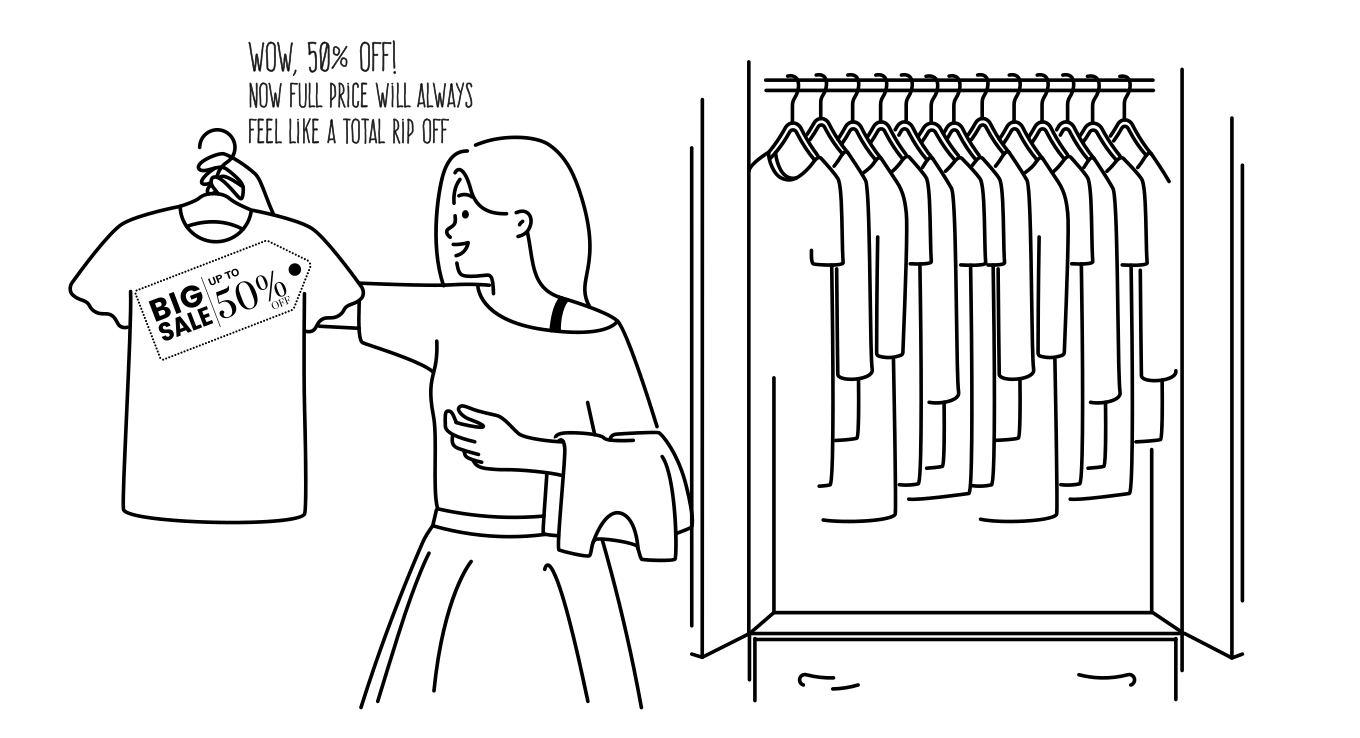
As you’re leaving, you see a fun t-shirt hanging in a store window that your friend would really love, and it’s only $30. Why did you jump so quickly to buy the necklace instead of shopping around for other gift options? Because the initial price of the earrings became your anchor point for evaluating subsequent pricing information, shifting your perspective on what constitutes a good deal. The $100 established a clear price point in your mind. As a result, you evaluated the $75 necklace in relation to this set price point instead of looking at the cost objectively—the necklace seemed like a steal compared to the cost of the earrings! If you had encountered the necklace first, you would have been less inclined to buy it, instead holding out something in your budget like that awesome t-shirt.
Individual effects
When we become anchored to a specific figure or plan of action, we end up filtering all new information through the framework we initially drew up in our head, distorting our perception. This makes us reluctant to change our plans significantly, even if the situation calls for it. For instance, we often anchor to a generous underestimation of how long a task will take, then we resist adjusting our plans even when it becomes clear our initial time estimation was off. Perhaps you assume you’ll only need 20 minutes to shower and get ready for dinner with a friend but fail to inform them when everything is taking you twice as long as expected.
Why does this happen? The anchoring bias often causes us to overlook new information that would be relevant to our decision. Instead, we rely on the initial anchor—which usually is not relevant to our decision at all. The price of the earrings in the earlier example should be arbitrary when considering the price of the necklace. Despite this, we focus on this irrelevant initial information and neglect actual relevant information, like the possibility of more affordable gifts.