

Plan from the future. Act in the present.
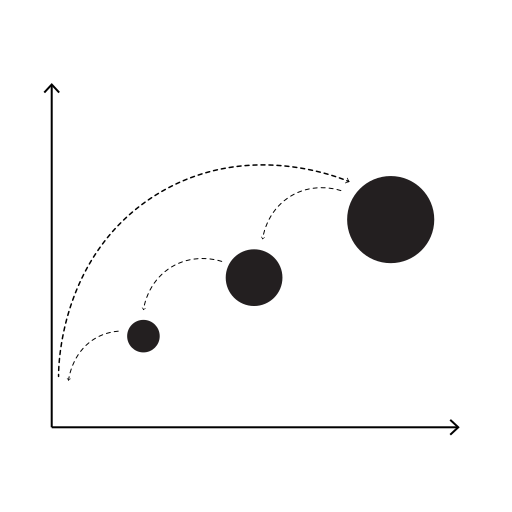
Most strategic planning moves forward from today, quickly getting bogged down by current limitations, budget constraints, and operational friction. Backcasting flips the script. You start by envisioning an absolute, ideal future state, and then work backward step-by-step to figure out what needs to be true today to make that future a reality. It’s the ultimate tool for breakthrough innovation instead of incremental progress.
When You Need This
Perfect for decisions with:
- Long-term, audacious goals (5-10 year horizons).
- Shifting from a saturated market to a completely new paradigm.
- Ambitious creative projects that seem overwhelming from the starting line.
Not ideal for: Short-term quarterly planning, immediate crisis management, fixing obvious operational bottlenecks.
Reverse-Engineer Your Strategy in Four Steps
Step 1: Define the Ideal Future State
Don’t worry about “how” yet. Paint a vivid, specific picture of the end goal. Where exactly do you want to be?
Step 2: Move Backward to the Preceding Milestone
Ask yourself: “What must happen immediately before we reach that future state?” Identify the major condition or milestone that precedes the goal.
Step 3: Map the Chain of Prerequisites
Keep asking “And what must happen before that?” all the way back to the present day. You are building a bridge from the future to today, not the other way around.
Step 4: Execute the First Logical Step
Now look at the immediate next step in front of you. Because it’s anchored to your ultimate vision, you can execute it with total conviction.
Real Example: Publishing a Paradigm-Shifting eBook
The Goal: Publish a definitive, widely-read eBook exploring the intersection of creative thinking and AI within 12 months. 10 Months Out: The book is being aggressively marketed to a waitlist. 8 Months Out: The final manuscript is locked, edited, and formatted for digital platforms. 5 Months Out: The core chapters detailing the central creative frameworks are drafted. 2 Months Out: The comprehensive outline and AI-research phase are complete. Today’s Action: Dedicate two hours to finalizing the book’s core thesis and chapter structure.
Pro Moves
Ignore Present Constraints Initially
When defining the future state, temporarily suspend disbelief. Don’t let current tech limitations or resources dilute the vision.
Identify the “Showstoppers”
As you work backward, pinpoint the specific milestones that have the highest risk of failure. Front-load your effort to solve those first.
The Real Benefit
It forces you out of incremental, “safe” thinking. By anchoring to the future, you stop asking “What can we do next?” and start asking “What must we do to get there?”