
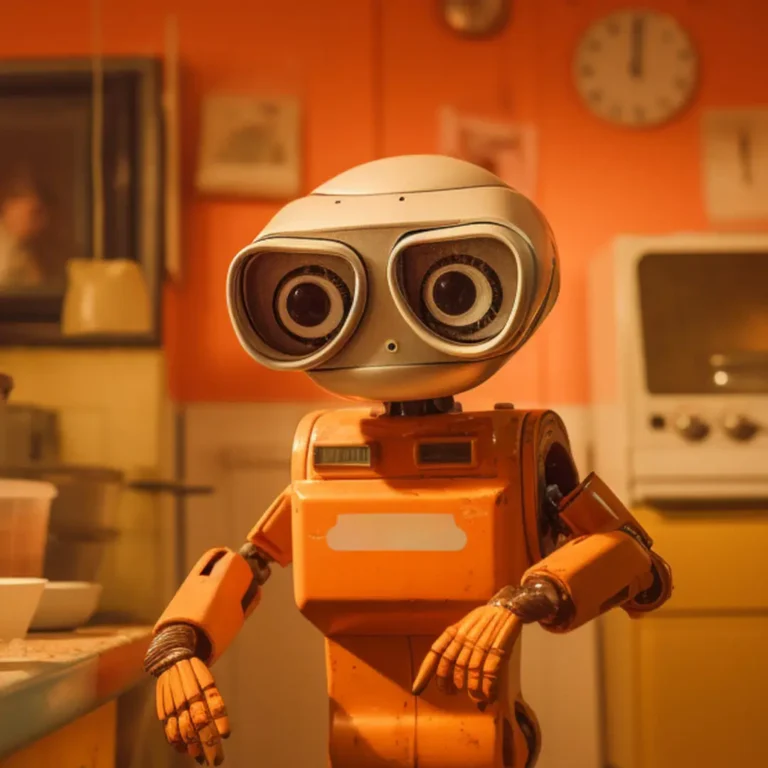
Clanker is a derogatory internet slang term for robots and AI systems, borrowed from science fiction and adopted as shorthand for frustration with artificial intelligence.
Clanker surfaced in 2025, kept going through 2026, and has become the most recognisable word in a small vocabulary of anti-AI internet slang. If you have encountered it in a comment section or a customer service thread and could not tell whether it was a joke, an insult, or a reference, the short answer is that it is usually all three at once.
Where the word clanker comes from
Clanker is science fiction in origin. It appears in Star Wars media, first surfacing in the 2005 video game Republic Commando, where clone troopers used it dismissively for battle droids — a reference to the noise the machines made when they moved.
For two decades it stayed inside that fandom. In 2025 it broke out, becoming widely used to express hostility toward machines ranging from delivery robots to large language models, a shift attributed to anxiety about the societal effects of AI.
The fictional origin matters more than it first appears. Borrowing an insult from a universe where machines are genuinely a hostile army lets the user import the whole framing — humans versus machines, sides, a conflict — while retaining the deniability of a film reference.
Borrowing an insult from a universe where machines are a hostile army lets the user import the whole framing — sides, a conflict — with the deniability of a film reference.
Why clanker took off
Three forces converged.
AI became physically present. For years, AI was abstract — a recommendation algorithm, a search ranking. Then it acquired a body and a location. Delivery robots on pavements, automated voice systems on support lines, chatbots standing between customers and any human being. Delivery robots impede pedestrians and raise safety issues, while online, researchers have flagged the rising share of automated accounts. The word arrived when the irritation acquired a target you could point at.
Job anxiety. A large share of usage carries an economic charge — the machines are taking entry-level, white-collar work. That reading appears consistently across coverage of the trend, and it maps onto real labour-market data about early-career hiring.
Service frustration. There is a measurable customer preference underneath the meme. Reported industry survey figures indicate that a substantial majority of customers prefer human interaction to AI in service settings, and that a significant share would switch companies on discovering AI was handling their support. The slang is the informal expression of a documented preference.
It also functions partly as pushback against AI advocacy from industry figures who have championed embedding the technology into nearly every aspect of daily life.
Why AI systems are the last to understand clanker
The most genuinely interesting thing about clanker is not the insult. It is what the word demonstrates about the technology it targets.
When Euronews asked ChatGPT what clanker meant, it returned the Star Wars definition, described it as British military slang, and referenced a book series — with no mention of the anti-AI usage at all. The model had the archaeology and none of the present tense.
Linguists have identified why this is structural rather than a fixable gap. Slang now moves faster than training cycles, so a model trained on everything that happened before cannot access how a word is being used right now — which makes emergent slang one of the few remaining domains where humans are reliably ahead of the systems.
There is a neat irony in a word for mocking AI being a word AI cannot keep up with. It also has a practical use: emergent slang is a decent live test of how current any language model’s grasp of culture actually is.
There is a neat irony in a word for mocking AI being a word AI cannot keep up with.
The clanker controversy, and why it is not small
The clanker controversy is the part that gets left out of most explainers, and it is the part that matters most if you are deciding whether to use the word.
Linguists analysing the trend have noted that its usage mirrors classic slur constructions and racial tropes, emerging from a cultural unease about technology — and that anthropomorphising AI into a human-shaped category means the mockery inherits the patterns historically used against marginalised groups.
That is not a theoretical concern. A recognised sub-genre of this content consists of people constructing scenarios — segregated facilities, family disapproval of relationships, slur-adjacent wordplay — that are recognisably borrowed from the history of racial discrimination, with a robot inserted in place of a person. Several closely related terms in the same vocabulary function specifically as near-homophones of existing racial slurs, which is the point of them.
Critics have made the sharper version of the argument: that the appeal is driven less by any real concern about technology than by the opportunity to use recognisable slur constructions with a socially acceptable target. Algorithms reward strong reactions, and content in this genre reliably captures people who dislike AI, people who want to seem transgressive, and people enjoying the absence of a real objection — simultaneously.
Whether a machine can be insulted is not the question. Nothing is harmed by being called a clanker; language models do not have feelings to hurt. As one columnist observed, a slur says more about the speaker than its target. The question is what a habit of practising this grammar does to the person practising it, and what it normalises when the same structures are pointed elsewhere.
For clarity: idaete uses the term here descriptively, to explain what readers are encountering. We do not use it otherwise, and we would advise organisations against adopting it in any public-facing capacity.
What clanker is actually signalling
Strip away the meme and clanker is a fairly precise piece of social data.
It marks the moment AI stopped being a technology people read about and became a thing people have to deal with — in queues, on pavements, on support calls, in hiring processes. Abstract technologies do not get insults. Insults require friction, repetition, and a sense that the thing is imposing itself.
The vocabulary is worth watching for that reason, whatever one thinks of it. A word like this appearing and sticking is a reliable indicator that a technology has crossed from novelty into daily life — and that the public relationship with it has become considerably more adversarial than the industry deploying it seems to believe.
Also read
- Why Does AI Hallucinate — one of the frustrations driving the term
- Are Brands Designing for AI, Not Humans?
- The Seniority Trap — the job-displacement anxiety underneath
- Why Everything Looks Artificial